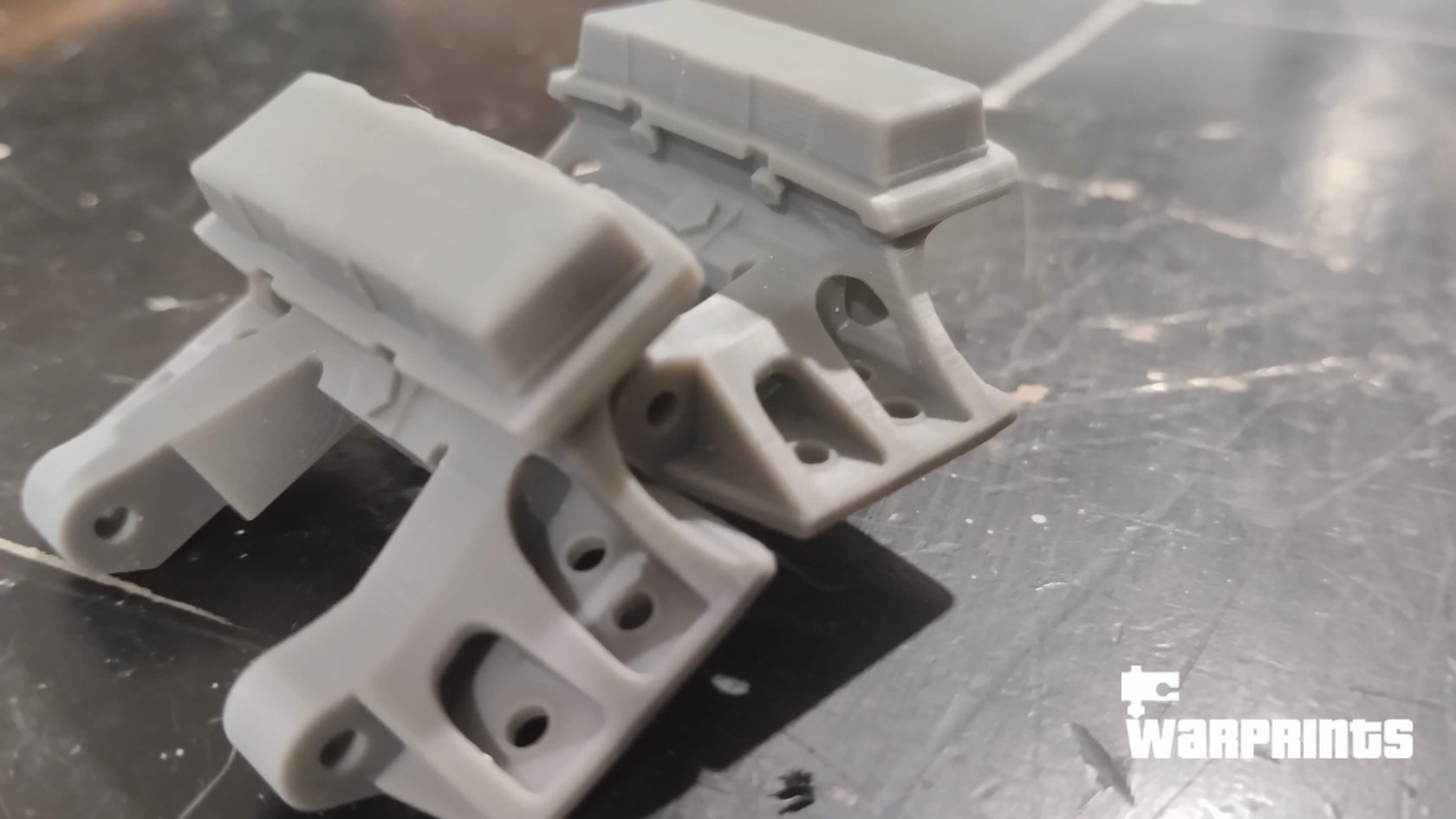
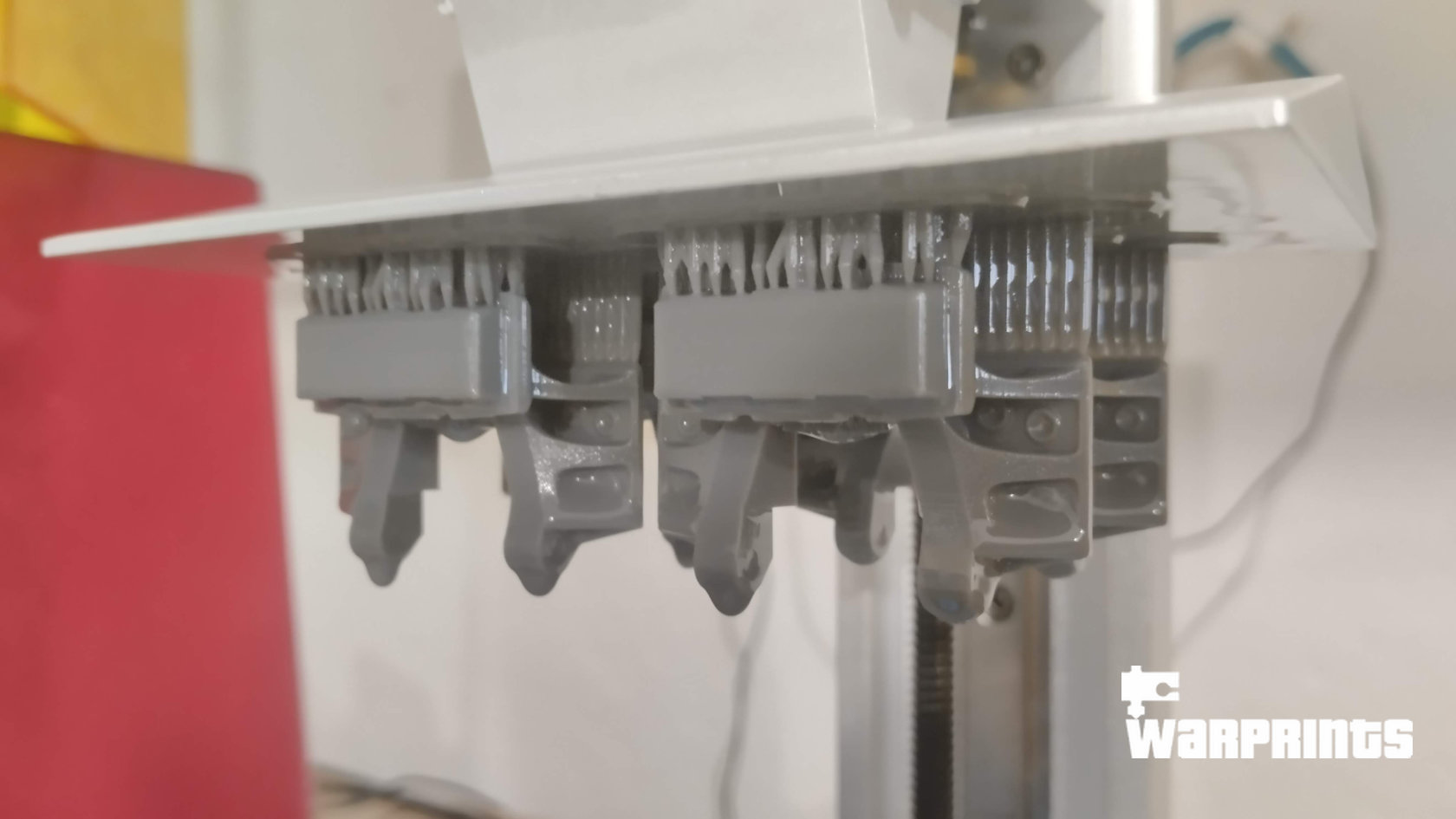
With our previous kits, the line between a static display model and a fully functional RC vehicle was intentionally thin. Both versions shared identical physical parts – the only difference lay in print infill density, perimeter count, and choice of materials.
The Sd.Kfz. 251 Ausf. D marks a complete generational shift for Warprints.
Rather than compromising one platform to serve the other, we engineered two distinct lower hull architectures from the ground up. While both models share the exact same upper hull structure, their lower chassis, suspension arms, tensioners, wheels, and tracks are fundamentally different.
Here is why we parted ways with unified lower components – and why choosing the right version before building matters.
The Design Philosophy: Optimization vs. Conversion
Designing a single chassis for both static display and heavy RC operation always leads to compromises:
- RC Demands: High mechanical strength, multi-part assemblies for easy bearing insertion, and impact-resistant thermoplastics.
- Static Demands: Maximum scale detail, sharp edge fidelity, lower assembly time, and lower overall cost.
By splitting the lower chassis design into two dedicated variants, our Static Model gains museum-grade visual fidelity at a lower price point.
However, this decision introduces one absolute rule: Do not attempt to convert a Static model into an RC vehicle. The static components and suspension mounts are not engineered to sustain driving torque or outdoor impacts. If you think you might want a functional RC model in the future, we strongly recommend buying the RC-ready chassis from the start.
1. Road Wheels: Multi-Part ABS vs. Single-Piece Resin
The road wheels perfectly illustrate the difference in engineering priorities between the two versions.
- RC Version (FDM / ABS + Rubber Tires): Built to endure heavy terrain. The wheels are printed in high-density ABS to support internal bearings and mechanical axles. Each wheel assembly is fitted with separate rubber tire.While printed at a fine 0.1mm layer height, subtle FDM layer lines are naturally visible out of the printer. These can be easily smoothed using a light brush-application of pure acetone.
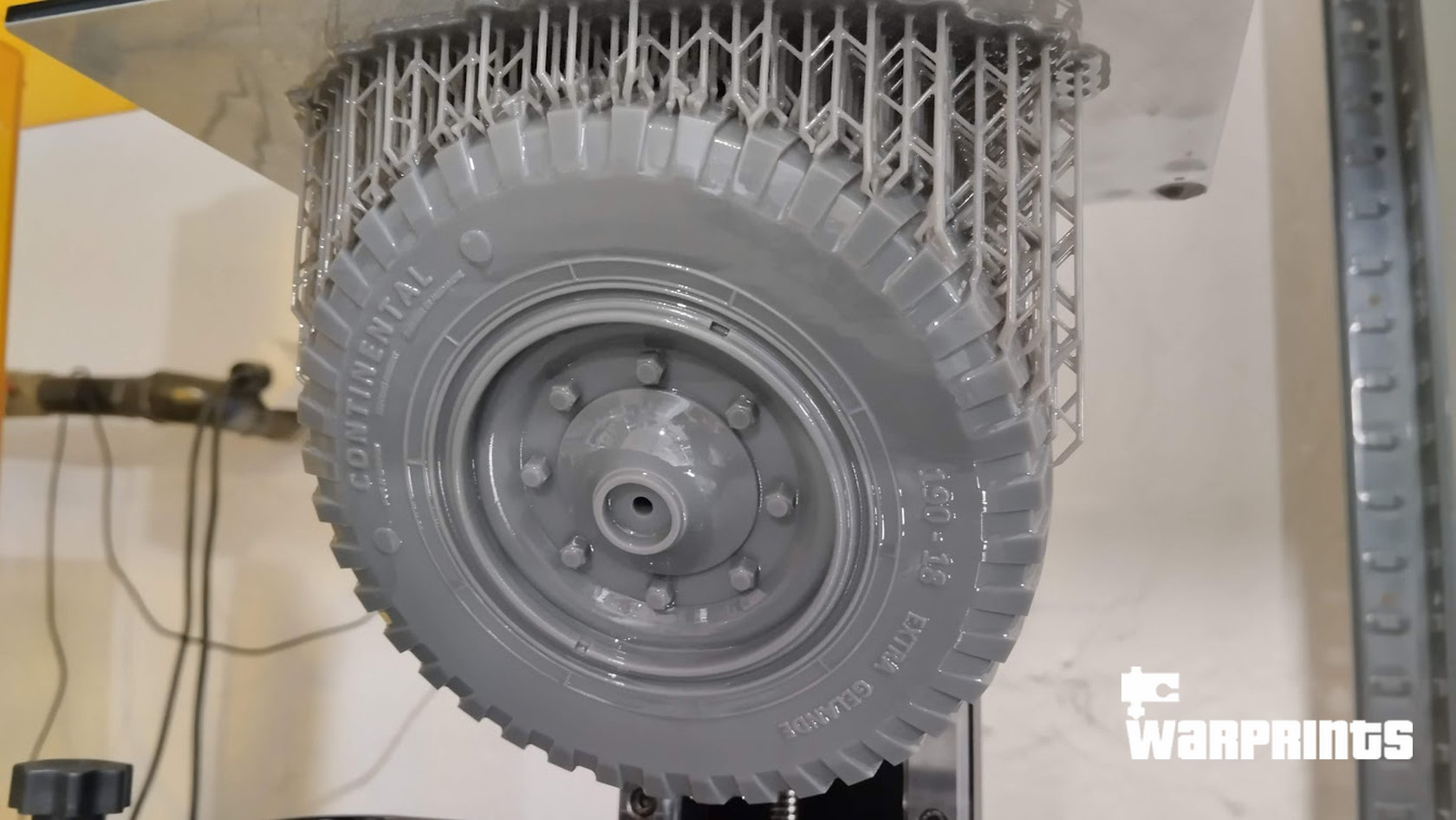
- Static Version (100% Resin): Since static wheels carry no dynamic load, we manufacture them as massive, single-piece high-resolution resin prints. Resin captures razor-sharp bolt heads and smooth rim contours without any visible print lines. Furthermore, printing each wheel as a single solid unit dramatically simplifies assembly time.
2. Track Links: Functional Assembly vs. Sharp Detail
The same material logic applies directly to the track system.
- RC Tracks (ABS + TPU Track Pads): Engineered for traction and wear. The track links are printed in high-impact ABS and fitted with individual flexible TPU rubber track pads. This combination ensures high grip on hard surfaces and long-term durability under heavy torque.
- Static Tracks (Resin): Printed exclusively in high-detail photopolymer resin. The track pins and rubber pad outlines are molded into sharp, seamless single-piece links that replicate the exact geometry of the original German tracks without requiring heavy dynamic reinforcing.