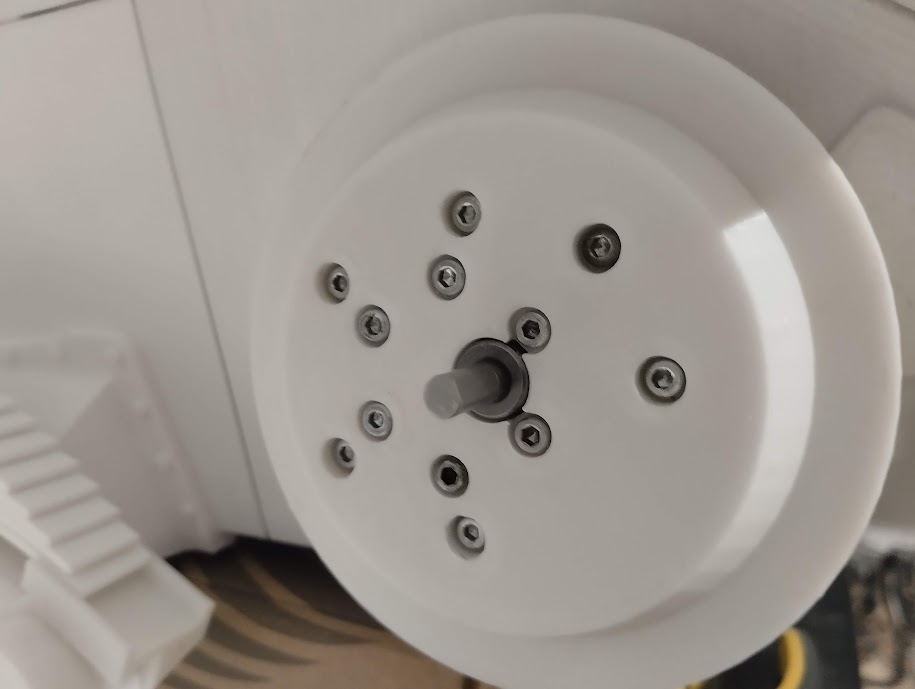
The Jagdpanzer 38(t) Hetzer was our very first 1/6 scale kit. Unlike our later development models, which feature indirect reduction gearboxes and bearing-supported axles, the Hetzer was designed with the motor shaft directly connected to the main drive sprockets.
While direct drive simplifies internal layout, transferring heavy electric motor torque directly into a 3D-printed plastic sprocket creates severe mechanical stress. Here is how we evolved our drive interface to handle high-torque outdoor operations.
In the early production run, the drive sprocket utilized a standard D-shaped bore matching the motor output shaft. The shaft was locked into place using a single M4 grub screw threaded into a heated insert or embedded nut inside the hub.
For light driving on flat surfaces, this design was functional. However, heavy outdoor terrain—such as driving through thick grass, mud, or steep inclines—revealed the limits of a single point of contact:
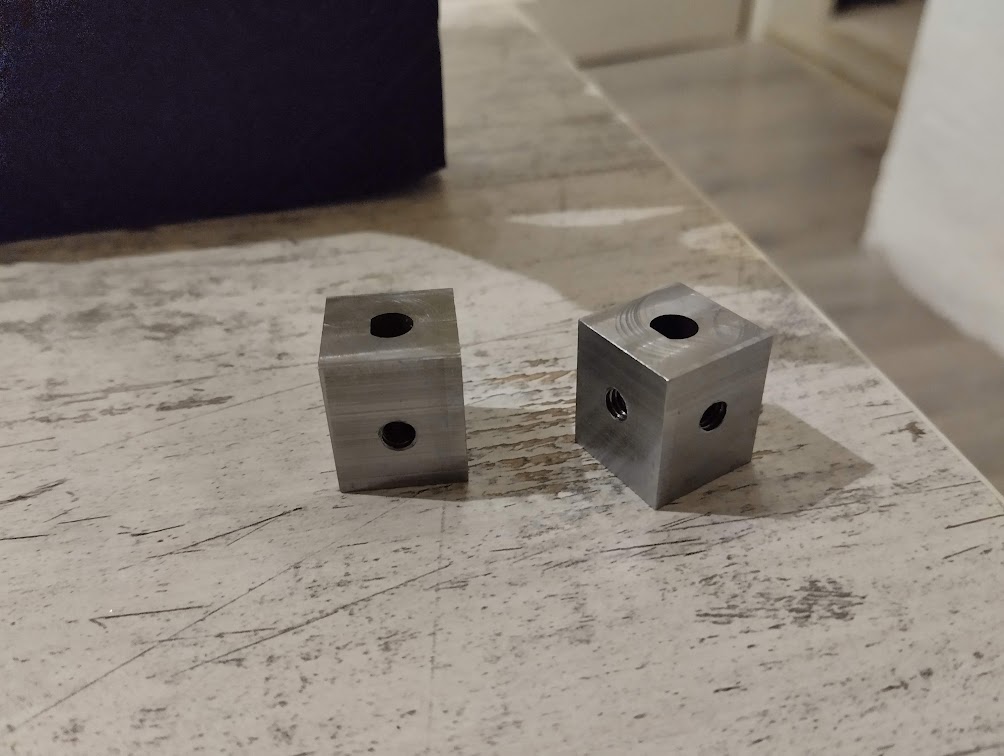
To permanently solve this torque bottleneck without redesigning the entire hull geometry, we introduced a major engineering upgrade in 2023: a solid, square aluminum core insert.
Instead of relying on plastic to handle the rotational forces, the entire motor-to-sprocket interface is handled by metal:
When we first introduced this upgrade, every aluminum core was custom-milled using a CNC machine.
As production scaled up, we transitioned to sourcing precision-cut, pre-dimensioned aluminum stock blocks. This change reduced machining lead times while maintaining exact tolerances on every unit.
By transferring the torque from a single M4 set screw to a square aluminum core backed by four M5 locking points, the contact surface area between the drive mechanism and the plastic sprocket increased dramatically.
This upgrade eliminated hub deformation, reduced drivetrain backlash to zero, and made the Hetzer’s direct-drive setup fully capable of handling aggressive outdoor terrain without stripping or damaging the drive wheels.
The Evolution of 1/6 Scale Tank Periscopes: From Paint to Real Mirrors When working in…
Resin vs. FDM: Why We Don't Use Resin for Mechanical Loads In 3D printing, there…
Optimizing Production: Why We Switched from Glass and PEI to G10/FR4 Bed Surfaces In 3D…
In a 1/6 scale RC military vehicle weighing tens of kilograms, standard hobby-grade filaments fail…
Mastering Surface Quality: Why We Use Ironing Over Laser-Cut Plates When replicating armored vehicles in…
At Warprints, 3D printing is our primary manufacturing method, but it is not a cure-all.To…