When working in small scales like 1/16, simple visual shortcuts are acceptable. A dab of reflective green paint (such as AMMO Mig Periscope Green) on a solid block of plastic is usually enough to fool the eye.
However, when scaling up to heavy 1/6 scale models, these paint shortcuts completely fall apart.
A real tank periscope is an optical assembly housing angled internal mirrors protected by thick ballistic glass.
To achieve authentic optical depth on a large-scale kit, we had to engineer a completely different solution.
Here is how our periscope design evolved over time – and where it stands today.
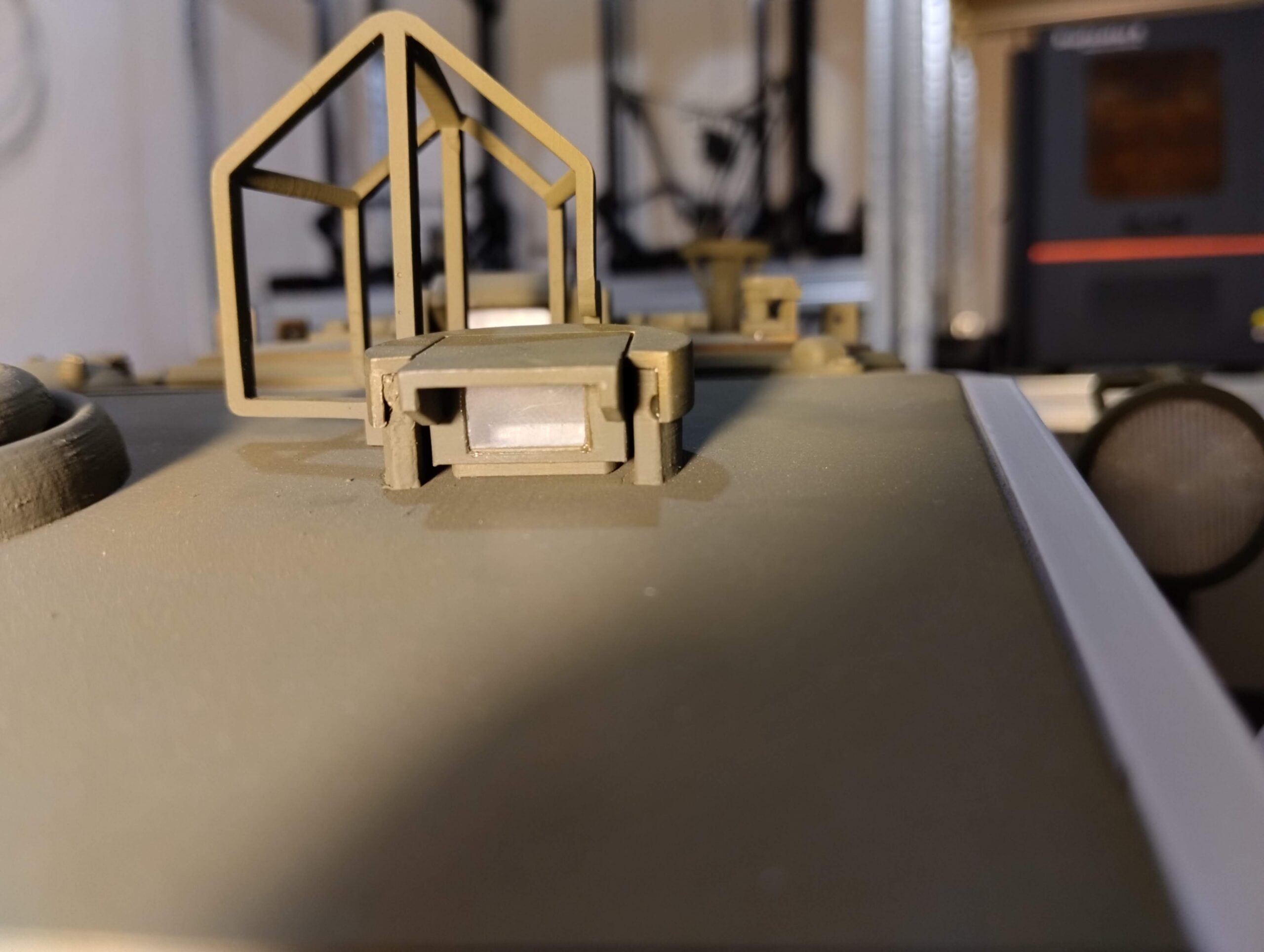
Version 1: Silver Paint & Waste Plastic
Version 2: Aluminum Tape Upgrade
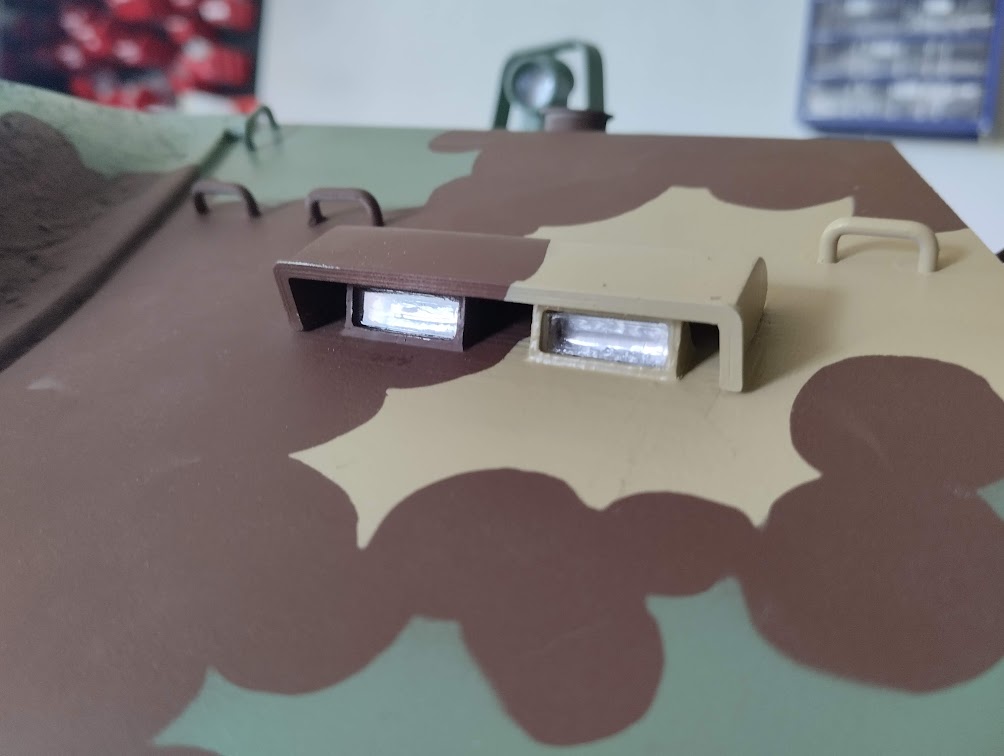
Version 3: Laser-Cut Plexiglass
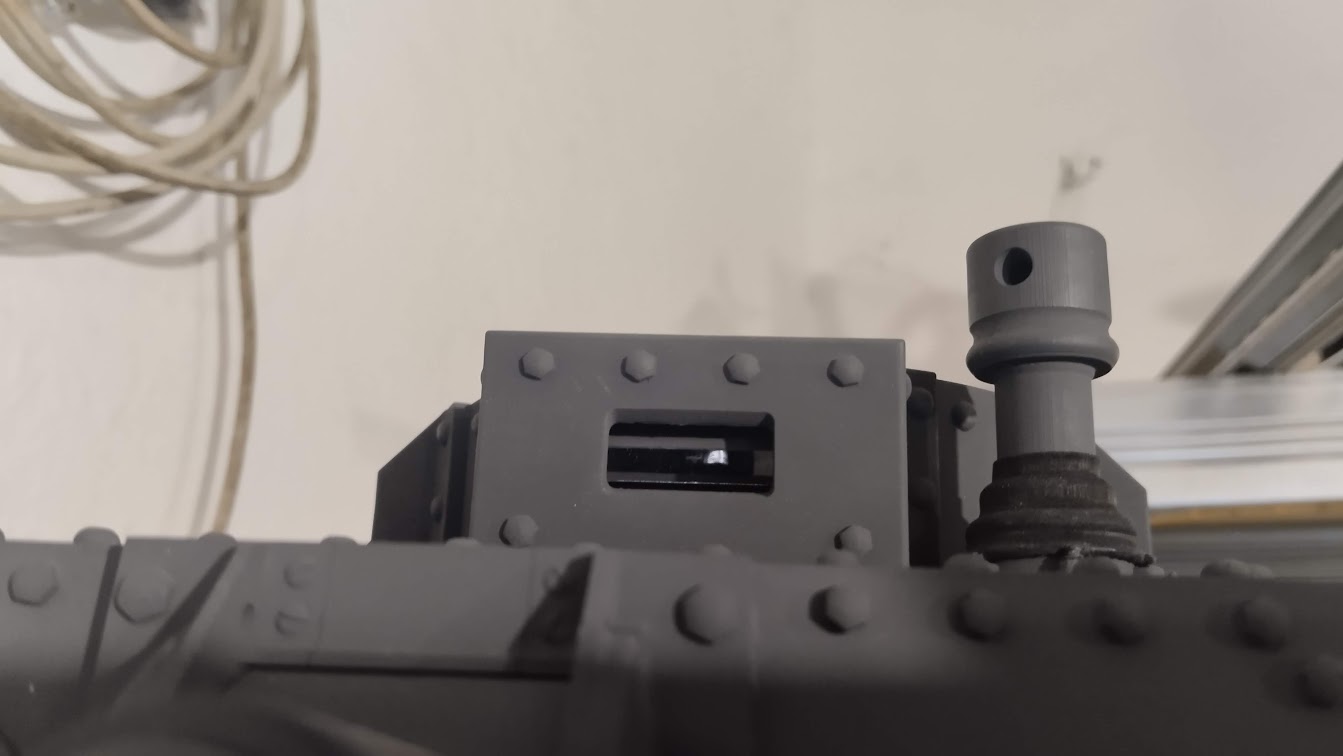
Version 4 (Current Standard): Real Glass Mirrors & Laser-Cut Acrylic
(This photo shows a specific version of the 4th-generation periscope – this tank did not have protective glass on its periscopes. But the mirror is clearly visible in the photo.)
Curving or cutting circular lenses by hand from clear plastic sheets was time-consuming and imprecise.
By switching to pre-cut optical components (miniature glass mirrors and laser-cut acrylic blocks), our current design is not only the most realistic version we have ever made – it is also the easiest for the builder to install. Components drop directly into predefined slots inside the 3D-printed periscope housing.
There is only one strict rule when assembling these optical units: do not use standard superglue.
As cyanoacrylate cures, it releases fumes that outgas and leave a permanent, cloudy white film over the inside face of the acrylic lens and mirror. Once the periscope assembly is sealed, this haze is impossible to clean.
You can inspect these optical periscope assemblies across our heavy armor range in the Warprints Shop.
The Jagdpanzer 38(t) Hetzer was our very first 1/6 scale kit. Unlike our later development…
Resin vs. FDM: Why We Don't Use Resin for Mechanical Loads In 3D printing, there…
Optimizing Production: Why We Switched from Glass and PEI to G10/FR4 Bed Surfaces In 3D…
In a 1/6 scale RC military vehicle weighing tens of kilograms, standard hobby-grade filaments fail…
Mastering Surface Quality: Why We Use Ironing Over Laser-Cut Plates When replicating armored vehicles in…
At Warprints, 3D printing is our primary manufacturing method, but it is not a cure-all.To…