When scaling down a military vehicle to 1/6 scale, standard 3D printing finishes often fail to replicate optical components convincingly.
For headlight lenses – such as the prominent lights on a Cromwell turret – most makers settle for cloudy PETG or clear resin.
At Warprints, we use PMMA (Polymethyl Methacrylate). PMMA is real plexiglass, an unconventional and notoriously difficult filament to print, but it offers unmatched advantages for scale realism.
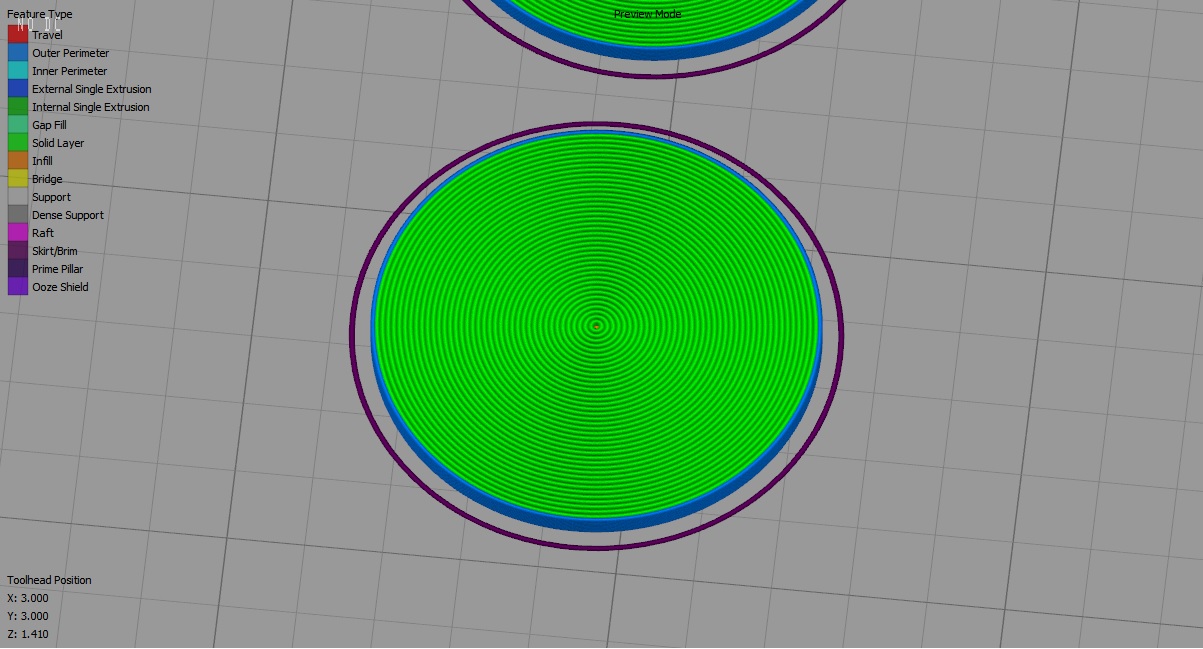
A common misconception is that a 3D-printed lens needs to be perfectly, chemically clear. Real wartime headlight lenses were not hollow windows; they had distinct internal diffuser lines and structural ribbing to direct the light beam.
Instead of post-processing the print into a completely smooth finish, we use the internal mechanics of the FDM process to replicate this historical geometry:
PMMA is a temperamental material. It requires complete dryness, high bed temperatures, and a very narrow, unforgiving nozzle temperature window. Dialing it in incorrectly by even two degrees results in a brittle, white, milky component rather than glass.
However, mastering this process allows us to skip artificial clear-coating shortcuts and build components out of the exact material used in full-scale manufacturing.
We implement these advanced slicing and material techniques across our product line to ensure that even the smallest optical details look authentic under any lighting conditions.
A prime example of this approach is our Cromwell 1/6 scale kit, where the large, prominent turret headlight utilizes this exact PMMA structure. Instead of a cheap plastic look, the model features a historically accurate lens that refracts light precisely like the real British tank.
The Evolution of 1/6 Scale Tank Periscopes: From Paint to Real Mirrors When working in…
Resin vs. FDM: Why We Don't Use Resin for Mechanical Loads In 3D printing, there…
Optimizing Production: Why We Switched from Glass and PEI to G10/FR4 Bed Surfaces In 3D…
In a 1/6 scale RC military vehicle weighing tens of kilograms, standard hobby-grade filaments fail…
Mastering Surface Quality: Why We Use Ironing Over Laser-Cut Plates When replicating armored vehicles in…
At Warprints, 3D printing is our primary manufacturing method, but it is not a cure-all.To…